Research
SEED PRODUCTION
Once seed quantities are determined by marketing management, the production department contracts with local growers to produce hybrid seed in the southern states of Telangana (the capital being Hyderabad) and Karnataka (Bangalore is the capital). Hybrid seed is produced in association with hundreds of growers; Plantgene supplies parent seed to them.
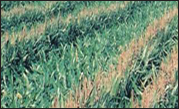
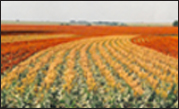
In field seed, rows of male and female parents are inter-planted in isolated production fields separated from other similar-crop fields by a buffer zone in order to maintain genetic purity of the crop.
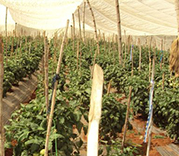
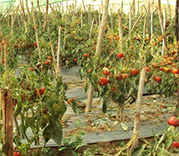
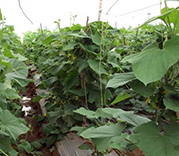
In hybrid vegetable seeds, net-houses are used for tomato, pepper, eggplant and cucumber. Production of hybrid melon, watermelon, squash/pumpkin and okra is in open field, with plastic mulch and drip irrigation.
We start with the purest possible parent seed and rigorously monitor quality from planting and harvesting through processing and bagging.
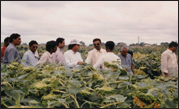
Quality control personnel visit our seed growers throughout the growing season to supervise the planting, cultivation, crossing, harvest and transportation of the seed crop. Their objective is to guarantee adherence to Plantgene’s high seed quality and field condition standards. After harvesting, our experts continue to examine and test seed as it goes through various processes during seed conditioning.
SEED CONDITIONING
The seed is transported from the production fields to a conditioning plant in Hyderabad. Each seed lot is tested before conditioning and shipment. The seed is dried, cleaned, sized, treated, bagged and prepared for shipment to domestic or overseas customers.
We know that a farmer’s crop can be no better than the seed quality with which it starts. Plantgene ensures that its seed is never a limiting factor in a farming operation.